
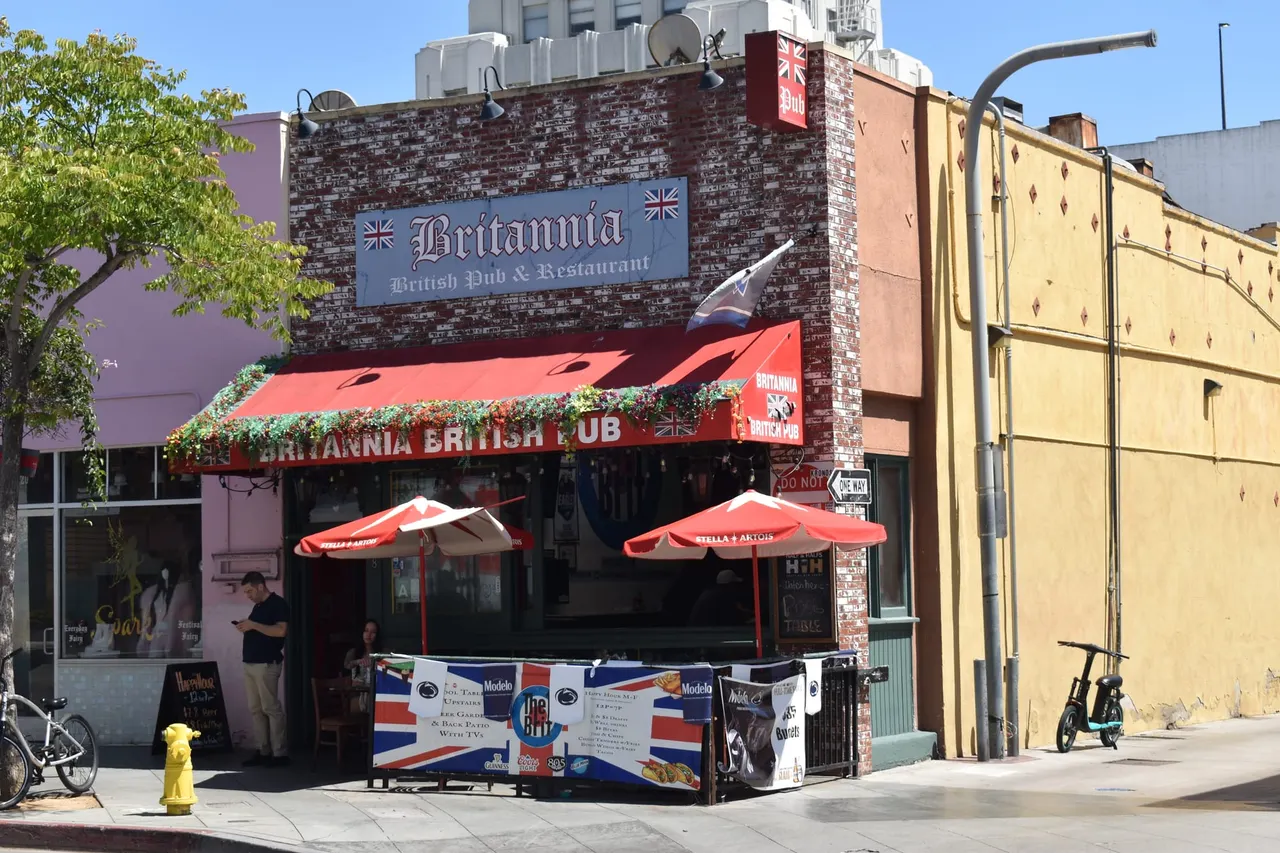
Taco Bell Cantina, the chain's upscale urban spinoff featuring alcohol service and a modernized dining experience, has filed for commercial building permits to open a location at 318 Santa Monica Blvd., as the city continues to relax restrictions on formula retail to revitalize the area.
The address is currently home to the Britannia Pub, a British bar and restaurant known for catering to Philadelphia sports fans. Noone at The Brit (as it is known to locals) provided comment on the bar’s future by press time.
However, permit filings show the project would convert 1,510 square feet of existing office space into a restaurant and bar with a mezzanine level, along with 175 additional square feet for a new walk-in cooler. The work includes electrical, mechanical and plumbing improvements, new grease traps and removal of existing interior and exterior finishes. The job is valued at nearly $400,000.
The Cantina format differs substantially from Taco Bell's roughly 8,000 traditional U.S. locations. Rather than drive-thrus and standalone buildings, Cantinas occupy street-level storefronts in high-foot-traffic urban corridors and serve beer, wine and frozen cocktails — branded Twisted Freezes — spiked with rum, tequila or vodka. The menu also includes shareable, tapas-style appetizers not available at standard locations. Interiors feature communal seating, local artwork, digital ordering kiosks and exposed food-preparation areas.
Taco Bell opened its first Cantina in 2015 and the concept has since grown to roughly 60 locations across more than a dozen states, with flagship stores on the Las Vegas Strip and in New York's Times Square.
The business model has proven lucrative with company officials claiming it generates four times the revenue of a traditional location. Buildout costs remain comparable to a standard store because savings on parking lots and drive-thru infrastructure offset the cost of experiential upgrades.
A Ban Born, Made Permanent, Then Repealed
The permit filing arrives as the regulatory landscape governing chain restaurants in downtown Santa Monica has undergone a dramatic reversal over the past several years.
Downtown Santa Monica had restricted traditional fast food since roughly 1988, but the modern push for stricter controls intensified after quick-service chains exploited definitional loopholes and more than doubled their population by 2018.
In 2018, the council unanimously adopted an urgency ordinance barring chain restaurants with more than 100 domestic locations from opening on the Third Street Promenade with business officials saying large chains could outbid independent operators for prime storefronts. In an ironic twist, Taco Bell was used by name as an example of the kind of business could push out smaller operators. The council made the ban permanent in January 2021, raising the threshold to 150 locations.
The pandemic rewrote the calculus. Promenade occupancy plummeted as anchor tenants including ArcLight Cinemas, Gap and Bloomingdale's went dark. The city began loosening zoning restrictions and the council unanimously suspended the fast food ban drawing support from councilmembers who had once decried the industry. By late 2023, all formula retail limits had been lifted citywide, and in August 2025 the council made the elimination permanent.
City planners acknowledged during those discussions that the prohibition had unintentionally restricted smaller businesses such as ice cream shops and bakeries, while noting the inherent difficulty in distinguishing between "fast food" and "fast casual" restaurants. The January 2025 Palisades Fire added further urgency, with quick-service restaurant sales dropping nearly 14% year-over-year.
Raising Cane's Also on the Way
Taco Bell Cantina is not the only national chain capitalizing on the changed environment. Louisiana-based chicken chain Raising Cane's has announced plans to open its first Santa Monica location on the Third Street Promenade, continuing the company's aggressive California expansion.
The new Raising Cane's will occupy the former Bibimbap space and several adjacent units, including the former Yogurtland location — a business that was itself a casualty of the old restrictions, having been blocked from moving onto the Promenade proper and ultimately leaving Downtown entirely. The chain, which operates roughly 900 locations nationwide, is set to open this summer at 1401 Third Street Promenade, making it the first major fast food arrival since the ban's repeal. California now ranks as the chain's second-largest state market, with roughly 117 locations, behind only Texas.